 Zylo Solar
Zylo Solar
Zylo Solar
What is the best angle for solar panel installation? The practical answer usually begins with the site’s latitude, but it should not end there. For a fixed rooftop system, installers often choose a tilt close to local latitude. This position helps panels receive sunlight across the year. However, roof direction, seasonal weather, shading, and available mounting space can change the result.
Professor Martin Green, a leading photovoltaic researcher, has emphasized a similar principle: “For fixed systems, a tilt angle close to the local latitude is usually a sound starting point.” That advice is useful, but incomplete. A south-facing roof in the Northern Hemisphere may perform well at a moderate tilt. A roof covered by morning shadows may need a different design. Snowy locations can also benefit from steeper panels, allowing snow to slide away more easily.
Small differences matter less than clear sunlight. A panel tilted at 30 degrees may outperform one at 35 degrees if nearby trees block the higher-angle system. Roof structure matters, too. A perfect mathematical angle is not always the safest installation choice. Engineers must check wind loads, drainage, maintenance access, and local building requirements.
There is no universal answer.
This guide examines annual and seasonal tilt angles, roof-mounted systems, adjustable frames, and common installation mistakes. It also questions a popular assumption: maximum midday output is not always the same as maximum yearly energy. The best angle balances sunlight, structure, cost, and real conditions at the property. That balance deserves careful measurement, not guesswork.
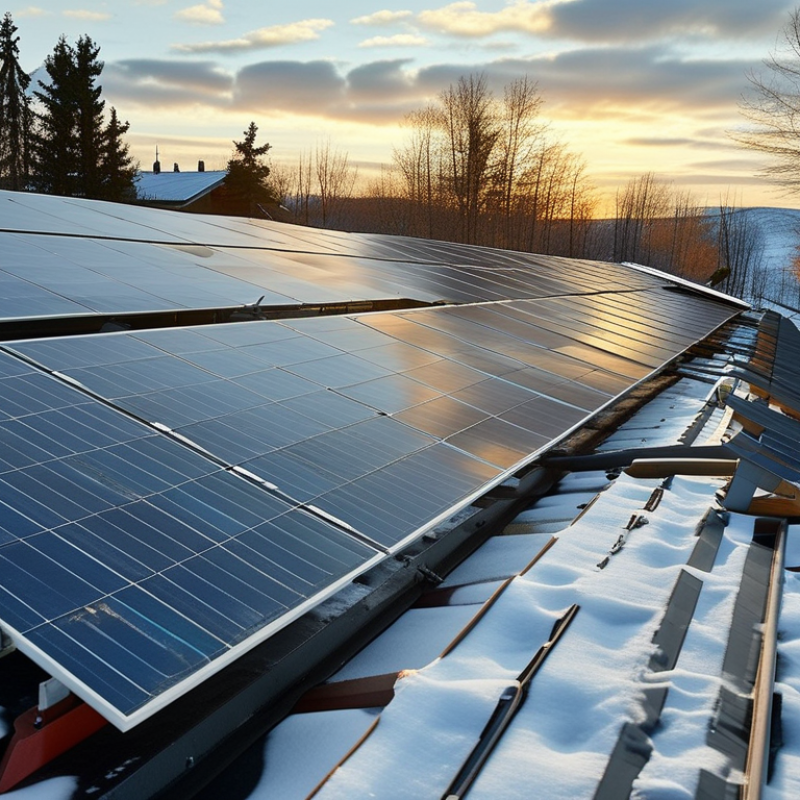
What Is the Best Solar Panel Installation Angle?
What Solar Panel Installation Angle Means and Why It Matters
A solar panel’s installation angle is its tilt from a level roof or ground surface. It is not the direction the panel faces. Direction is called azimuth. Both measurements influence how much sunlight reaches the panel throughout the day.
During a site assessment, installers examine roof pitch, latitude, shading, and seasonal sunlight. A panel aimed toward the strongest midday sun usually produces more electricity. However, the “best” tilt is rarely one perfect number. A roof angle near the local latitude may provide balanced yearly performance. Steeper angles can improve winter exposure, while flatter angles may suit summer production and low-profile roofs.
Small differences matter.
For example, a nearby chimney can shade one panel during winter mornings. Dust may also collect faster on a shallow surface, especially during dry weather. A steeper panel can encourage rainwater to wash away debris, but it may face stronger wind loads and require more secure mounting. In snowy regions, the angle can affect how easily snow slides off, although snow removal should follow safe procedures.
A calculator can suggest an ideal angle, but it cannot inspect every roof condition. On-site measurements remain important. I have seen neat mathematical recommendations become less useful after trees, parapets, or roof vents were considered. Panel output also changes with the seasons, so a slightly imperfect angle may be the most practical choice when installation costs, maintenance access, and structural limits are included.
| Installation Consideration | Recommended Angle or Direction | Why It Matters | Best Use | Important Notes |
|---|---|---|---|---|
| Fixed annual tilt in the Northern Hemisphere | Approximately equal to the site latitude | This generally provides a strong year-round balance between summer and winter solar exposure. | Homes and commercial systems with fixed mounting | The ideal value can vary because of local weather, shading, roof design, and the time of day when electricity is most valuable. |
| Fixed annual tilt in the Southern Hemisphere | Approximately equal to the site latitude, facing true north | Panels receive more direct sunlight over the year when they face toward the equator. | Fixed rooftop and ground-mounted systems | Magnetic north and true north are not always the same. A site assessment should account for local magnetic declination. |
| Low-latitude installations | Often about 5°–20° | A lower tilt can better match the higher position of the sun in the sky and may reduce wind exposure. | Locations near the equator | A minimum slope is often useful for rainwater runoff and maintenance, but the exact requirement depends on the mounting system and local conditions. |
| Mid-latitude installations | Often about 25°–45° | This range commonly provides a practical compromise between annual energy production and roof compatibility. | Many temperate-climate locations | The site latitude is a useful starting point, not a universal rule. Roof pitch and structural limits may determine the final angle. |
| High-latitude installations | Often about 40°–60° or more | A steeper angle can improve exposure to the lower winter sun and help snow slide off the panel surface. | Locations with low winter sun or regular snowfall | Steeper mounting can increase wind loading and may require additional structural support. |
| Summer-priority adjustment | Site latitude minus approximately 10°–15° | A shallower angle can favor the higher sun path during summer and may increase seasonal output. | Seasonal properties and summer-dominant electricity demand | This setting may reduce winter production compared with a year-round latitude-based tilt. |
| Winter-priority adjustment | Site latitude plus approximately 10°–15° | A steeper angle can favor the lower winter sun and may improve snow shedding. | Winter heating loads and year-round properties in snowy regions | Additional tilt does not eliminate shading from nearby trees, buildings, or terrain. |
| Seasonally adjustable mounting | Adjust near latitude −15° in summer, latitude in spring/autumn, and latitude +15° in winter | Changing the tilt several times per year can improve alignment with seasonal solar altitude. | Accessible ground-mounted systems | The added labor, hardware, and maintenance may outweigh the energy benefit for small or difficult-to-access installations. |
| True south-facing array in the Northern Hemisphere | Azimuth close to 180° | Facing the equator generally maximizes annual solar exposure in the Northern Hemisphere. | Sites with flexible orientation | Small deviations from true south usually have a modest effect, especially when the roof has a suitable tilt. |
| True north-facing array in the Southern Hemisphere | Azimuth close to 0° | Facing the equator generally improves annual sunlight access in the Southern Hemisphere. | Sites with flexible orientation | Exact output depends on latitude, tilt, shading, and local weather patterns. |
| East- or west-facing roof | Use the existing roof pitch when practical | East-facing panels tend to produce more energy in the morning, while west-facing panels tend to produce more in the afternoon. | Roofs where equator-facing orientation is unavailable | Orientation and electricity-use timing can be more important than achieving a mathematically perfect tilt. |
| Flat roof installation | Use a low-profile tilted system, commonly around 10°–20° | A modest tilt can improve sunlight exposure while limiting wind load, row spacing, and self-shading. | Commercial roofs and flat residential roofs | Drainage, ballast, roof penetrations, maintenance access, and spacing between rows must be considered together. |
| Snow-prone location | A steeper angle than the annual optimum may be beneficial | Steeper panels can reduce snow accumulation and allow gravity to assist snow shedding. | Cold climates with recurring snowfall | Snow may still remain on panels during heavy storms. Never remove snow using unsafe tools or methods that could damage the modules. |
| High-wind location | The lowest effective angle compatible with energy goals | Lower profiles can reduce wind uplift and the forces transferred to the roof or support structure. | Coastal, exposed, or hurricane-prone areas | Structural engineering, certified mounting hardware, and local building requirements take priority over small theoretical gains. |
| Shading-affected site | Choose the angle and layout that reduce shade during valuable solar hours | Even a well-tilted panel produces less electricity when shaded by trees, buildings, chimneys, or nearby rows. | Complex roofs and partially obstructed sites | Shade analysis should be performed across the year because the sun’s path changes by season. |
| Primary performance objective | Maximize annual energy, seasonal energy, or time-of-use value | The “best” angle depends on whether the goal is maximum yearly generation, winter output, summer output, or alignment with electricity demand. | Every solar installation | A slightly non-optimal angle may be the better overall choice when it lowers installation cost or matches an existing roof. |
Often, yes. In the Northern Hemisphere, south-facing roofs usually receive the strongest yearly sunlight. East-facing panels collect more morning energy. West-facing panels may help when demand rises after work. North-facing roofs often perform poorly, but local conditions can change the result.
Start near the site’s latitude. This is only a starting point. A 30-degree roof can perform well, even when the theoretical target is 35 degrees. Weather, snow, roof design, and shade may matter more than a few degrees.
With adjustable mounts, use a latitude-based setting during spring and autumn. Raise the tilt about 10 to 15 degrees in winter. Lower it about 10 to 15 degrees in summer. These ranges are practical, not guaranteed.
Winter sunlight arrives lower in the sky. A steeper surface can face that light more directly. Summer sunlight sits higher. A flatter setting may work better then. Not every roof allows seasonal adjustment.
No. A different angle cannot fix a chimney blocking the panel. Check chimneys, dormers, trees, and nearby structures before installation. Shade can erase the benefit of a carefully chosen tilt.
Check it around 9 a.m., noon, and 3 p.m. Repeat these checks in different seasons. Shadows move across the roof. A clear midday roof can still suffer morning or winter shading.
Fixed mounting is simpler and usually needs less maintenance. Adjustable mounting may improve output where seasonal sunlight changes strongly. The improvement may be smaller than expected. I would measure it, not assume it.
Record monthly energy readings after each tilt change. Compare readings at similar times and under similar weather conditions. Adjust around the spring and autumn equinoxes when practical. Small data sets can mislead. Keep notes.
Turn off relevant equipment before making adjustments. Use proper fall protection. Never climb onto a wet or fragile roof. Ground-mounted panels are usually easier to adjust. Safety matters more than a small production gain.
The best solar panel installation angle is the tilt that allows panels to receive strong, consistent sunlight throughout the year. A practical starting point is to match the panel tilt to your location’s latitude, then consider the roof’s direction and the sun’s seasonal position. In the Northern Hemisphere, south-facing panels usually capture the most sunlight, while east- or west-facing roofs may require adjustments to match morning or afternoon energy needs. So, what is the best angle for solar panel installation? The answer depends on local conditions rather than one universal number.
Seasonal adjustments can improve production, with a steeper angle often benefiting lower winter sun and a flatter angle supporting higher summer sun. However, the final angle must also suit the roof’s design, available space, local weather, snow or rain patterns, and the strength of the mounting system. A secure, well-ventilated installation with minimal shading may deliver better real-world results than an ideal angle that is difficult or unsafe to install.
