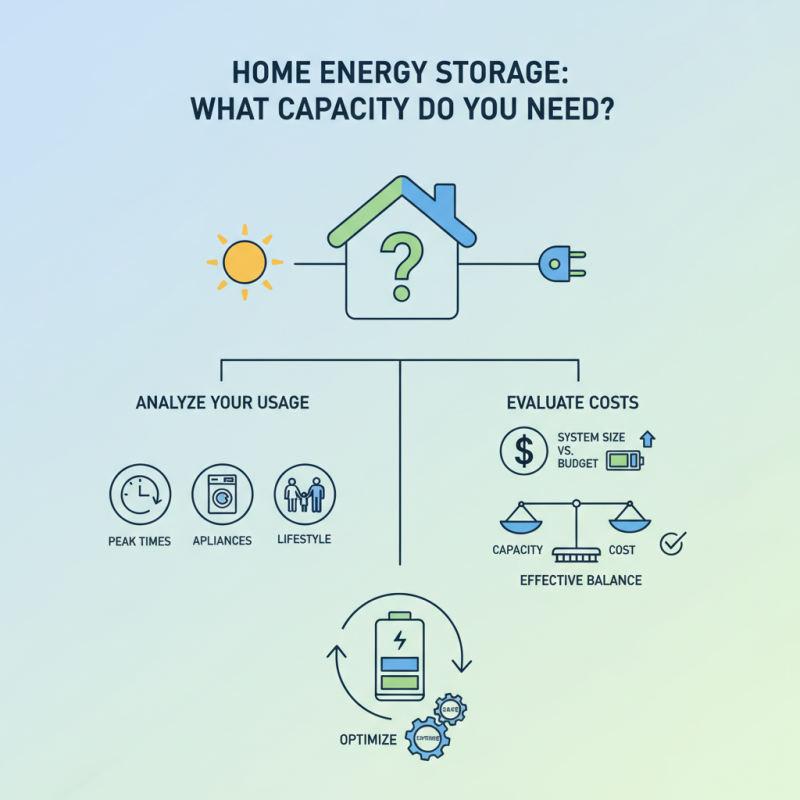
Determining "What capacity of energy storage do I need for my house" is crucial for homeowners today. John Smith, an energy storage expert, states, "Understanding your energy needs is key to selecting the right storage system." Each home is unique, and so are its energy requirements.
Homeowners must evaluate their energy consumption patterns. Consider factors like peak usage times, appliances, and lifestyle. A typical family may need a larger capacity during peak hours. Fluctuations in usage can complicate this decision.
Reflecting on costs, a larger system can seem attractive but may not be necessary. You could overspend on capacity. Ultimately, analyzing your specific needs helps avoid waste. It's essential to balance capacity and cost effectively.
Understanding Energy Storage Systems for Home Use
When considering energy storage systems for home use, understanding your unique needs is crucial. According to the International Energy Agency, the average household in the U.S. consumes about 877 kWh per month. This consumption level should guide your energy storage capacity decisions. Experts suggest that a battery system should ideally cover 30-50% of your home’s energy usage.
Selecting the right energy storage system depends on various factors, including your power needs and usage patterns. For instance, does your household experience power outages often? In that case, you might require a higher capacity. A typical home battery can hold around 10 kWh, which is suitable for 1-3 days of backup during outages. However, the efficiency of these systems varies, often ranging from 85% to 95%.
Tip: Regularly assess your electricity bills to track your consumption. Small adjustments can lead to significant energy savings.
Consider seasonal changes as well. For example, winter may lead to higher energy use due to heating. Take note of these fluctuations when sizing your energy storage. Additionally, the integration of renewable energy sources, like solar panels, can further influence the amount of storage you'll need.
Tip: Think about future expansions to your system. Planning ahead can save you money and effort later.
Factors Influencing Energy Storage Capacity Requirements
When considering energy storage for your home, various factors dictate the needed capacity. One key aspect is your household consumption. The average U.S. home uses around 30 kWh daily. Knowing your usage can help determine the necessary storage. If your consumption is consistently higher, you may need more capacity.
Another important factor is solar energy generation. If you have solar panels, you can store excess energy. Reports indicate that homes with solar can offset up to 80% of their energy needs. With optimal solar production, a storage capacity of 10-20 kWh may suffice for many households. It’s essential to evaluate how much energy you typically produce versus how much you consume.
Seasonal changes also affect your needs. During winter, your energy demand may increase due to heating. Conversely, summer months might see high solar production. Balancing these variations requires careful thought. Some homeowners underestimate their peak demand or overestimate sunny days. Such miscalculations can lead to inadequate storage and reliance on the grid, which is not always ideal. Addressing these factors reduces the risk of energy shortages and enhances your home’s energy independence.
What Energy Storage Capacity Do I Need for My House? - Factors Influencing Energy Storage Capacity Requirements
| Energy Requirement (kWh/day) |
Battery Capacity (kWh) |
Usage Pattern |
Recommended Storage Duration (Hours) |
| 10 |
5 |
Evening Peak |
2 |
| 20 |
10 |
Daytime Use |
2 |
| 30 |
15 |
Mixed Usage |
3 |
| 40 |
20 |
High Demand |
4 |
| 50 |
25 |
Constant Usage |
5 |
Calculating Your Home's Energy Needs and Usage Patterns
When considering energy storage for your home, it's vital to assess your energy needs. The average U.S. household consumes about 877 kWh per month, translating to roughly 29 kWh daily. Understanding your usage patterns, such as peak usage times, can help you choose the right battery capacity. For instance, a home that uses 30 kWh daily may benefit from a 10 kWh battery, accommodating about one-third of daily consumption.
Reports indicate that homes typically experience increased energy use during evenings and early mornings. This is when solar energy generation is low. A well-calibrated energy storage system can store excess solar energy during the day. It can then release this energy during peak times. Depending on your location, such as a sunny climate, a larger capacity may be necessary to maximize solar benefits.
Some homeowners may underestimate their energy needs. A sudden increase in usage, like adding electric vehicles, can strain your system. It's important to regularly review and adjust your energy storage capacity as your needs change. Investing in a proper capacity ensures resilience against outages and price spikes.
Evaluating Different Types of Energy Storage Solutions
When considering energy storage solutions for your home, various options are available. Battery systems, such as lithium-ion and lead-acid batteries, are popular. A research report by the International Renewable Energy Agency (IRENA) indicates that lithium-ion batteries are expected to revolutionize home energy storage. They have a high energy density, making them efficient for residential use.
In contrast, lead-acid batteries are cheaper upfront but have a shorter lifespan and lower energy density. The Institute of Energy Economics states that the average energy requirement for a household is about 30 kWh per day. Depending on your energy consumption, you may need a storage capacity ranging from 10 kWh to 15 kWh to ensure reliability during peak hours. Factors like weather conditions and usage patterns also play a significant role in determining your specific storage needs.
Some homeowners may overlook the need for backup during grid outages. Neglecting this consideration can lead to frustration and inconvenience. On the other hand, investing in energy storage can reduce dependency on the grid. As policies evolve, experts predict a shift toward more cost-effective long-term solutions. Staying informed is essential in this changing landscape.
Energy Storage Capacity Requirements for a Typical Household
Integrating Energy Storage with Renewable Energy Sources
Integrating energy storage with renewable energy sources can significantly enhance efficiency and reliability.
Homeowners are increasingly using solar panels and wind turbines. However, these sources are intermittent.
Energy storage solutions like batteries can store excess energy generated during sunny or windy days. When energy production drops, stored energy can be used.
Choosing the right storage capacity is crucial. It depends on your household's energy needs and the renewable systems you have.
For instance, a family may require enough storage to power essential appliances during a blackout. Yet, it's common for homeowners to underestimate their storage needs.
Evaluating average daily consumption helps. Consider peak usage times too.
There are various storage technologies available, each with pros and cons.
Lithium-ion batteries offer higher efficiency but can be costly.
Lead-acid batteries are cheaper but have a shorter lifespan. Many people may overlook these details.
Consulting with an energy expert can clarify options and help avoid costly mistakes.
Every home is unique, and proper integration of energy storage is a key step toward achieving energy independence.
FAQS
: Household consumption and solar energy generation are key influences. Evaluate your daily energy use to determine needs.
An average home in the U.S. consumes around 30 kWh each day.
Seasonal variations can alter energy demand. For example, heating needs rise in winter, affecting storage requirements.
Underestimating peak demand can lead to insufficient storage. Miscalculations may result in reliance on the grid.
Battery systems, including lithium-ion and lead-acid batteries, are popular options for home energy storage.
Lithium-ion batteries have higher energy density and longevity. Lead-acid batteries are cheaper but offer lower efficiency.
Yes, many homeowners overlook backup needs. Neglecting this can lead to frustration during grid outages.
Combining storage with solar or wind energy helps store excess production for use when generation is low.
Experts can clarify storage options and help avoid costly mistakes in determining your needs.
Many people underestimate their storage capacity needs. Evaluating average daily consumption helps address this issue.
Conclusion
When considering home energy storage, a key question arises: "What capacity of energy storage do I need for my house?" Understanding energy storage systems is critical as they provide backup power and enhance energy independence. Several factors influence the required capacity, including the home's energy consumption patterns, peak usage times, and the integration of renewable energy sources like solar panels.
To calculate your home's energy needs, analyze your past energy usage and identify your typical daily and seasonal consumption trends. This assessment will help you evaluate various energy storage solutions, such as batteries or other systems, each with distinct advantages and limitations. Finally, effective integration with renewable energy sources can optimize energy utilization and ensure you choose the right capacity to meet your home's needs sustainably and efficiently.
 Zylo Solar